After hail damage, many vehicle owners are told their car needs “body work” — but that doesn’t always mean repainting or replacing panels. One of the most searched questions after a storm is:
“Paintless dent repair vs body shop — what’s the difference?”
Understanding the repair method used can make a huge difference in cost, repair time, and long-term vehicle value.
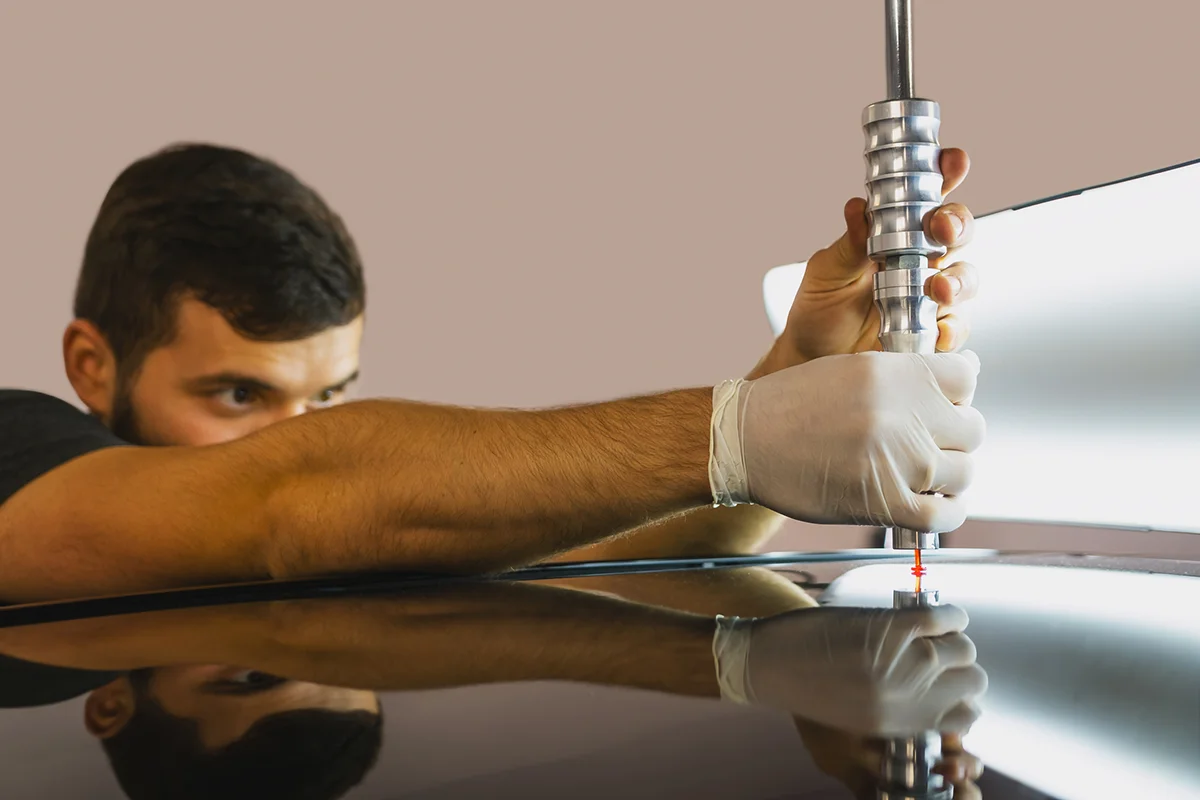
Paintless Dent Repair is a specialized technique used to remove dents without sanding, filling, or repainting the vehicle. Technicians access the back of the damaged panel and carefully massage the metal back to its original shape.
PDR is commonly used for hail damage because:
When performed correctly, PDR restores the vehicle to pre-storm condition without altering its original finish.
Traditional body repair involves sanding the damaged area, applying filler, repainting, and sometimes replacing panels. This method is usually reserved for severe damage where the paint has been cracked or metal is stretched beyond repair.
While traditional repair can fix hail damage, it comes with drawbacks:
Repainted panels can also appear on vehicle history reports, which may impact future buyers or trade-in offers.
For hail damage, paintless dent repair is almost always more cost-effective.
Because PDR requires fewer materials and less labor, insurance companies favor it whenever possible. Traditional body repair often costs more due to paint, parts, and extended labor time.
In many cases, PDR allows hail damage repair to be completed with little or no out-of-pocket cost when insurance coverage applies.
Paintless dent repair is significantly faster than traditional body repair.
No repainting means no drying time, no paint curing, and fewer delays — which is why PDR is the standard for hail damage.
When it comes to resale and trade-in value, paintless dent repair has a clear advantage.
PDR:
Traditional repair may leave visible differences or be flagged during vehicle evaluations.
Most hail-damaged vehicles qualify for paintless dent repair, but not all. The right method depends on:
A professional inspection determines the safest and most effective approach.

For hail damage, paintless dent repair is usually the best option — faster, less invasive, and better for your vehicle’s value. Traditional body repair is only necessary when damage is extreme.
If your vehicle was hit by hail, scheduling an inspection ensures the correct repair method is used and your vehicle is restored properly.


